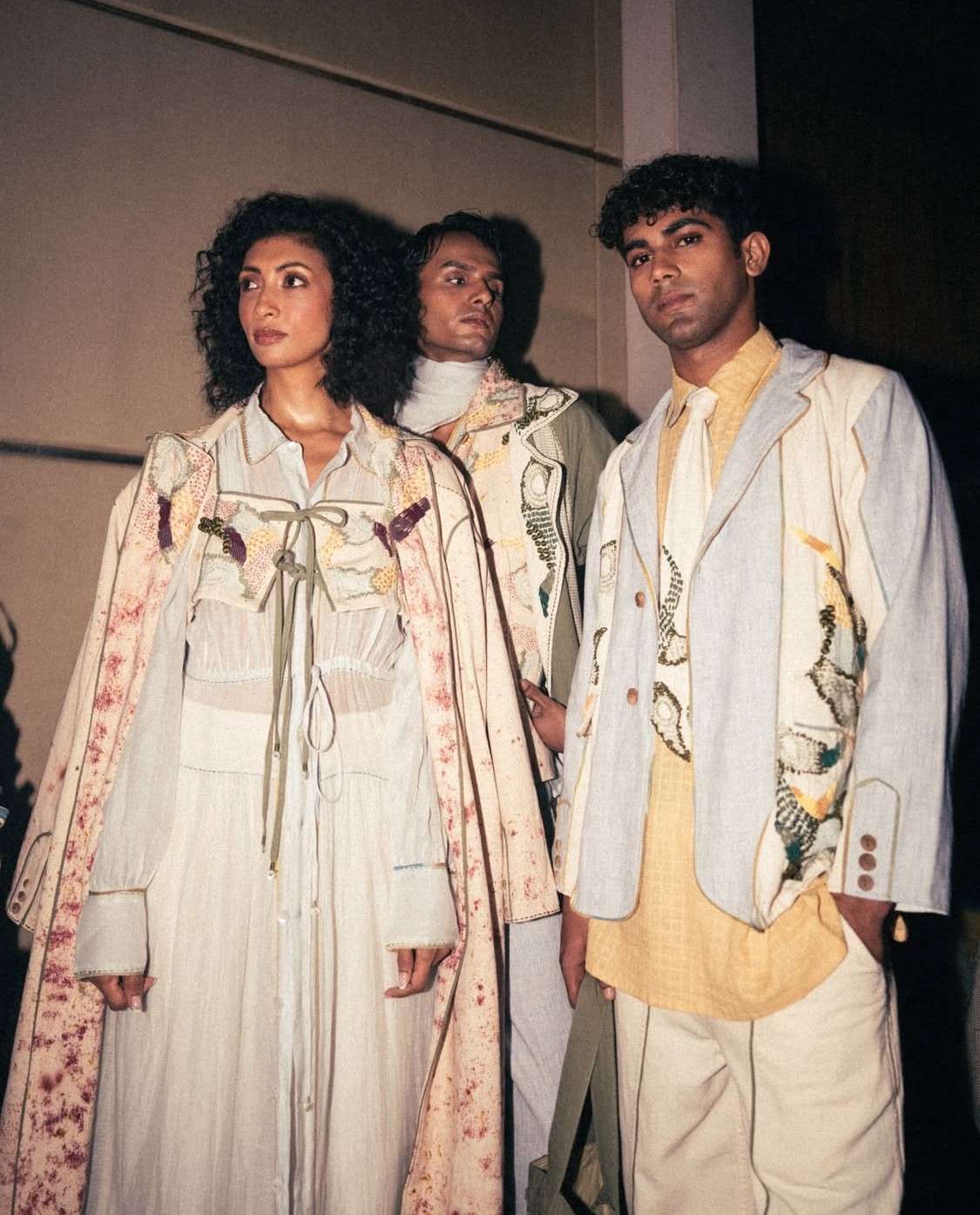
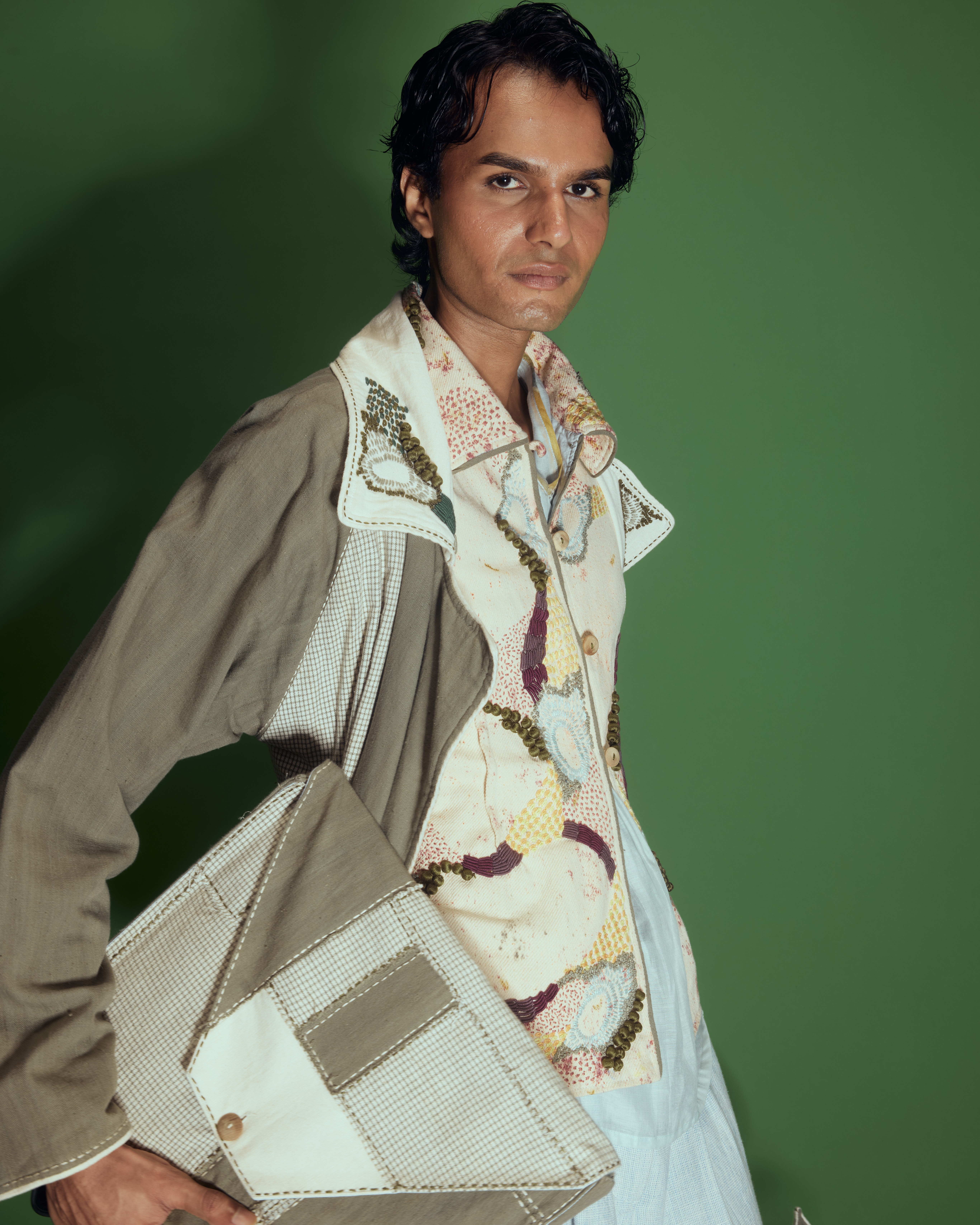
"We owe that to the people and the artisans we work with. I don't think we knew there was another way"
Most brands are defined by what they add. Lafaani is easier to understand through what it leaves out. There are no shoulder pads in its blazers and no fusing to hold a lapel stiff. Its trousers have no elastic, its garments contain no plastic and there isn't a metal fastening in the line. Everything that leaves the workshop is designed to break down into soil at the end of its life. And before that, it is designed to have a very long life. Founders Drishti and Rashmi didn't come to fashion through fashion. They met during a master's programme in sustainability, where they studied water conservation, wildlife, renewables, policy and agriculture. What they didn't study, they noticed, was clothing. "We were taught agriculture," Drishti says. "We were never taught cotton farming, or cotton cultivation, or the consequences of that." The gap stayed with them. So did a habit they both had of skipping lectures to go to exhibitions, museums and the craft bazaars that move through Delhi. Later, working on social and ecological impact projects, they travelled through roughly half the country between them. Craft clusters weren't the point of those trips, but they kept turning up. Drishti went on to work up the supply chain, with cotton farmers and migrant artisan groups. Rashmi kept returning to the clusters to learn what the makers were up against and what they needed. A short business-of-fashion course at NIFT, many long conversations, and the enforced stillness of the pandemic turned all of this into a brand called Lafaani. The design references are domestic before they are historical. They come from old family photographs and from the care parents, aunts, uncles and grandparents put into getting dressed on days that weren't special. A grandmother who wouldn't wear a certain saree without a certain shawl, and wouldn't wear either without her brooch. "It wasn't always for an occasion," Drishti says. "It was how much time and thought they would put into dressing up." The second source goes further back, to the historical dress of the subcontinent, which the founders admire for its functionality more than its ornament. Their job, as they see it, is to bring that logic into the present without turning it into costume. Rashmi is clear that none of this is meant to stay local. "I want to create something that is relevant and can be accepted by a global audience," she says. A traditional silhouette gets reworked until someone in another country could wear it on an ordinary Tuesday. She calls the result "elevated everyday," and the brand's position is mostly in the gap between those two words. The founders are open about what they don't do themselves. From the start they have had a design team who turn their references into patterns, fit and finished garments. "There was always that understanding that we don't have all the skills," Drishti says. They say the arrangement is collaborative, and fit comes first because the clothes are meant for daily use.
Refusals create problems, and at Lafaani solving those problems has become part of the aesthetic. "When I want to create a more structured, tailored blazer or coat, I can't make it traditionally, because that would need fusings or shoulder pads," Rashmi explains. "When I'm making a fitted trouser, I need to add elastics. These are things we cannot use, and strictly do not want to use." Without those shortcuts, the design team has to find other ways to make a garment sit close to the body. The answers are ruching, adjustable belts and shaping that the wearer controls. Tailoring by other means. "What you do next to create that structure," Rashmi says, "defines the silhouettes the brand wants to play with." That is why the brand hires designers who are, in Drishti's words, "open to dialogue." A conventional fashion curriculum doesn't prepare anyone for working this way. The brand works within four fixed rules: design for longevity, multifunctionality, craft connection and upcycling. Longevity covers more than durability. The pieces are made to ignore trends, work in several outfits and fit more than one body. Many are unisex, and customers tell the founders they get passed between partners. Every order ships with a small repair kit containing fabric swatches, embroidery thread and a needle. For bigger damage, customers can send the garment back to be mended. Multifunctionality means reversible pieces, worn front-to-back or inside-out, and adjustable fits. The idea is that a garment the wearer has made their own is harder to throw away. The hope, Drishti says, is that people won't give up on a piece "just because it has a little hole in it." Craft connection is how every textile gets made. The yarns are hand-spun or spun on the Ambar charkha. The fabric is handwoven and naturally dyed, some of it eco-printed with flowers that would otherwise have gone to landfill. All embroidery is done by hand. "We are sitting on such a rich cultural heritage," Drishti says. "It did not make any sense for us not to make use of it." Upcycling means nothing on the workshop floor is thrown out. Offcuts are sorted by colour and fibre and go into accessories, artworks and sometimes whole garments. Many sustainable labels explain everything to everyone. But Lafaani deliberately doesn't. Each tag names the fabric, the maker and the process. But on a rack in a multi-designer store, the founders don't expect anyone to buy a piece because it's sustainable. "The brand has to be designed first," Drishti says. "We cannot be yet another ill-fitting brand that's talking about sustainability." So the story gets told in parts, depending on who's listening. A customer from West Bengal might hear about kantha, Rashmi's history with the craft, and how it became one of the brand's signature techniques. European customers, the founders find, respond less to sustainability as a label and more to the craft and the people behind it. The facts are the same for everyone. What changes is which part leads.
But being slow and mindful in this economy comes at a cost. Things have changed over the past four years, the founders say. More merchandisers are willing to plan a selection together: they study who shops in the store and adjust sizing, colour or small design details before anything is produced. That's possible because production is in-house and every piece is made to order. The stores don't end up with unsold stock, and the brand doesn't get it back with nowhere to put it. "We knew it was going to be a long game," Rashmi says. With no formal training in supply chains, the pair took whichever step seemed logical rather than the one the industry expected. They found weavers willing to produce small runs and paid them more for it. They found dyers willing to dye small batches by hand instead of running a hundred metres through a machine. "We owe that to the people and the artisans we work with," Drishti says. "I don't think we knew there was another way." Plenty of brands say they're in it for the long term. Lafaani has a repair kit in every parcel and a workshop that throws nothing away, which is better evidence than the claim. In an industry that keeps finding reasons to make more, Lafaani has built a business on reasons not to.
Where you can find them: https://www.lafaani.com/